
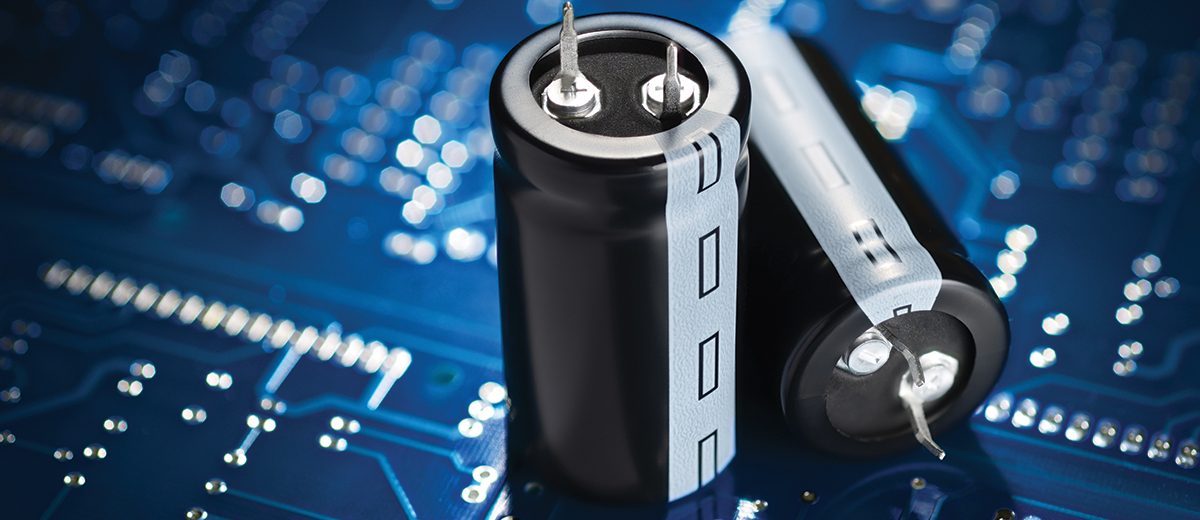
There are several ways to store energy, and when it comes to circuits and electronic devices, batteries and capacitors are typically used. Batteries store energy in chemicals, while capacitors store energy within an electric field. This is the main difference between the two, but we take a closer look at both batteries and capacitors in this article.
Energy Storage
Whether you use a battery or capacitor, stored energy creates an electric potential. This can then drive the flow of electrons, which can then power electrical components within a circuit, which is tied to some sort of appliance. These circuits are within the vast majority of devices that we use today, from smartphones to kitchen appliances. Engineers will decide whether to use a capacitor or battery depending on the circuit that they’re designing, and we explore them both below.
Batteries
As you will be aware, batteries come in lots of different shapes and sizes. For instance, batteries exist in tiny appliances like hearing aids and huge appliances like vehicles. Today, batteries power so many of our everyday appliances that it can be difficult to keep up with all of the variations in battery technology.
Internally, a battery has three primary components – two electrodes and an electrolyte. The electrolyte is the main variable, and it can be made from different substances, but it must be able to conduct ions (atoms or molecules) without permitting the electrons to pass. Its job is to force the electrons to exit the battery via the terminals that connect the electrodes to a specific circuit. When the circuit is off, the electrons can’t go anywhere. As such, the energy can be stored until it is required and the circuit is turned on.
What’s more, there is a negative electrode in all batteries called the anode. Chemical reactions take place within the anode’s surface when the battery is connected to a circuit, which creates positively charged atoms or ions. Electrons then are permitted to flow out into the circuit, while metal ions flow through to the positive electrode (cathode). The anode and cathode are made of different materials, with the anode typically comprised of lithium and the cathode of something like graphite. This is important because it forms a big difference in the way that each grips electrons, increasing the capacity of a battery.
Over the course of time, batteries lose their ability to charge and need to be replaced. In most instances, when a battery is no longer useful, it is discarded, which isn’t eco-friendly and is one of the main criticisms of batteries.
Capacitors
There are several functions of capacitors. Within a circuit, they are capable of blocking the flow of direct current but can allow alternating current to pass. What’s more, capacitors can tune a radio to a particular frequency within a circuit. But in recent years, many engineers have been looking at ways of using capacitors in order to store energy.
Most capacitors have two core components that are capable of conducting electricity, which is separated by a gap. Once connected to a live circuit, electrons flow in and out of the capacitor, which is then stored within the conductors. The capacitor stays electrically neutral, but the conductors on each side of the gap develop equal but opposite charges – what we know as negative and positive. The larger the surface area of a capacitor, the more charge it can store; also, if the gap between the two conductors is more insulated, a higher amount of charge can be stored.
In recent times, engineers have developed a hybrid known as a supercapacitor, which combines batteries and capacitors. It has two conducting surfaces and can store more energy than standard capacitors, as they have a very large surface area. While supercapacitors can’t match the energy density of batteries, there is hope that they can play a big role in energy storage in years to come.


