
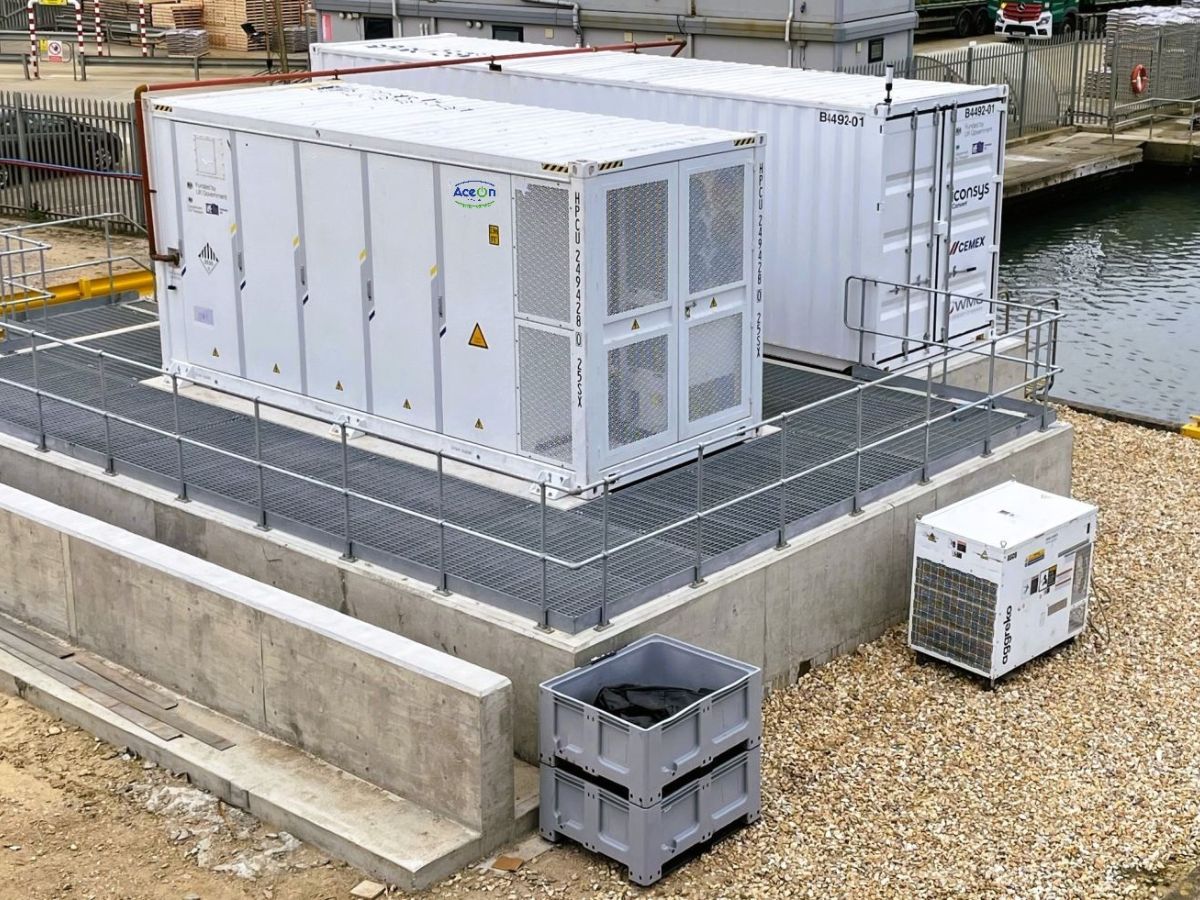
At AceOn, we’re at the cutting edge of battery energy storage development in the UK. We are constantly impressed by the ways in which other firms and government agencies look to harness renewable energy to ensure a greener future for us all. With that in mind, we want to provide you with a brief introduction to microgrids and the potential role that they can play in battery energy storage when deployed in the UK.
What is a microgrid?
The main role of a microgrid is to bring together several renewable sources of energy. It’s able to harness the likes of wind and photovoltaic energy, before storing the energy in a sophisticated battery energy storage system. Research has shown that microgrids are likely to play an extremely important role in the future of green energy.
Microgrids and battery energy storage
Fundamentally, a microgrid is a small power system that can operate in isolation. However, it can also be connected to the wider grid. Depending on their deployment, microgrids might be used to power small buildings or entire areas.
The key components of a microgrid are as follows:
- Energy source
- Energy sinks
- Connection to a large power system
- Means for control
- Safety assurance system
In recent times, microgrids have been designed to be based on energy storage systems, with the capacity to channel energy from multiple sources. At present, many microgrids are backed up by fossil fuels, but this is likely to change in the future.
The benefits of microgrids
Government agencies are excited about the potential of microgrids and the role that they can play in our journey towards more widespread, sustainable energy production. Some of the main benefits of deploying microgrids include the following:
- Improved reliability: Because microgrids have sources that are close to loads, the systems within are less susceptible to transmission disruption, typically caused by storms and other natural phenomena. As a result, microgrids are more reliable than other energy sources.
- Reduced costs: Although microgrids are currently expensive to install, their cost is likely to significantly decrease in the future.
- Harness locally-available resources: The fact that microgrids can channel multiple energy sources means that they can take advantage of the energy available in a particular area, making them more efficient.
The downsides of microgrids
While they have undoubted potential, microgrids aren’t yet the finished item. Some of the downsides of this energy technology include:
- Upgrade and maintenance requirements: As most microgrids are built upon existing distribution circuits, upgrades and regular maintenance are required.
- Connectivity: To operate efficiently, microgrids utilise high-bandwidth networked communications, which in itself can be costly and difficult to maintain.
How will microgrids be used in the future?
Many people are realising that drawing energy from the grid is more expensive than it has ever been. Given the fact that weather is becoming more extreme, the grid is likely to become less reliable, with outages more common. If microgrids can become more cost-effective, we’re almost certain to see them utilised throughout the UK and further afield, as more home and business owners commit to renewable energy. For more information about how microgrids are likely to be deployed in the near future, Think Microgrid is a super helpful and informative resource that’s worth checking out.


