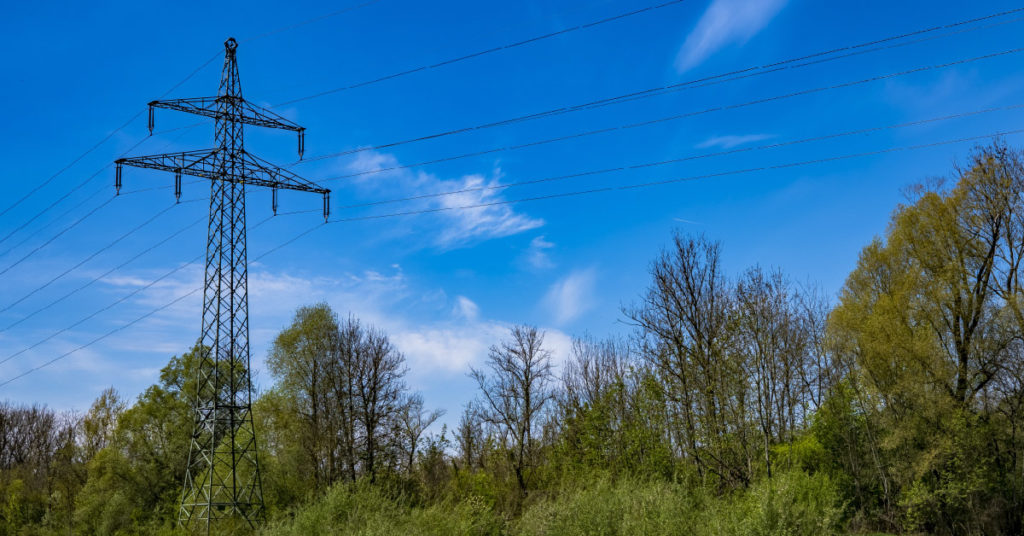
Balancing services are a way to even the fluctuating demands of the power grid in the short term. The requirement for the National Grid to utilise Balancing Services will continue to grow as the mix of energy used in the UK continues to grow.
As a result, businesses can take advantage of revenue-earning opportunities by engaging with Balancing Services. This is also known as Demand Side Response. But as we explore below, your ability to access revenue from this scheme will depend on the nature of your operations and how quickly you are able to respond to the changing conditions of the Grid.
What are frequency services?
The National Grid uses frequency services to maintain its 50Hz alternating frequency. There is a mandate in place that stipulates that the Grid must operate within 1% of this frequency at all times. Therefore, the Grid pays certain users for rapidly increasing or decreasing their demand in an attempt to stabilise electricity use.
What is dynamic containment?
Dynamic containment (DC) is deployed following a fault in the Grid. It’s essentially the fastest acting sequence response and is becoming extremely important as our system experiences more numerous losses and lower inertia. The National Grid relies on DC every day and works with users who participate in specific four-hour blocks. Users must respond to the needs of the Grid within one second and are offered a premium price for the speed of the service.
What is dynamic moderation?
Another key aspect of managing the Grid is dynamic moderation (DM), which is used to regulate large imbalances and keep them within operational limits. During periods where imbalances occur – often influenced by the weather – providers are required to balance demand and moderate generation throughout this time.
What is dynamic regulation?
Dynamic regulation is a pre-fault service that slowly corrects continuous deviations in frequency. In other words, DR is responsible for helping the Grid operate within 1% of its 50Hz frequency. Introduced between 2020 and 2022 through the National Grid’s Single Markets Platform (SMP), the three frequency services invite users to register for participation. Since its official launch in February 2022, the SMP has made the onboarding process with the National Grid much easier for businesses throughout the UK.
What is firm frequency response?
The National Grid uses firm frequency response (FFR) to balance the Grid and avoid disruptions. FFR utilises pre-approved assets that respond to both peaks and troughs in demand. It’s also responsible for ensuring that the users receive sufficient payment for their services. FFR is attractive to businesses that are able to respond rapidly to the real-time requirements of the National Grid. For instance, battery storage is a potentially viable solution for FFR, given its provision of readily available energy.
Short-term operating reserve (STOR)
After relying upon additional power to balance the system, the National Grid will then look at the additional capacity that has been secured ahead of time. This is referred to as the short-term operating reserve (STOR). Businesses within the scheme will be required to offer up to 3MW of generation or demand reduction to balance supply and demand. There’s also a timeframe to consider, as the energy is needed within 20 minutes of being called upon.
A daily auction manages how STOR is allocated, and users won’t be paid for their availability. Rather, they will only be paid if they provide the energy as and when required.
Using battery energy storage to generate revenue
Users with battery energy storage systems have a unique opportunity to generate income from the Grid. The fact that a battery energy storage system can rapidly provide energy back to the Grid highlights the huge potential here, which is something that AceOn is actively working on exploring.


