Sodium-ion is the next big battery technology set to transform the efficiency and effectiveness of battery energy storage systems (BESS).
Lithium-ion has dominated the landscape for years, but sodium-ion, with its unique properties, characteristics, and benefits, has a significant role to play in the global roll-out of BESS and other applications.
This guide, put together by AceOn’s technical experts, explains what sodium-ion battery technology is, how it works, and why it’s so exciting.
What is a Sodium-ion Battery, and How Does it Work?
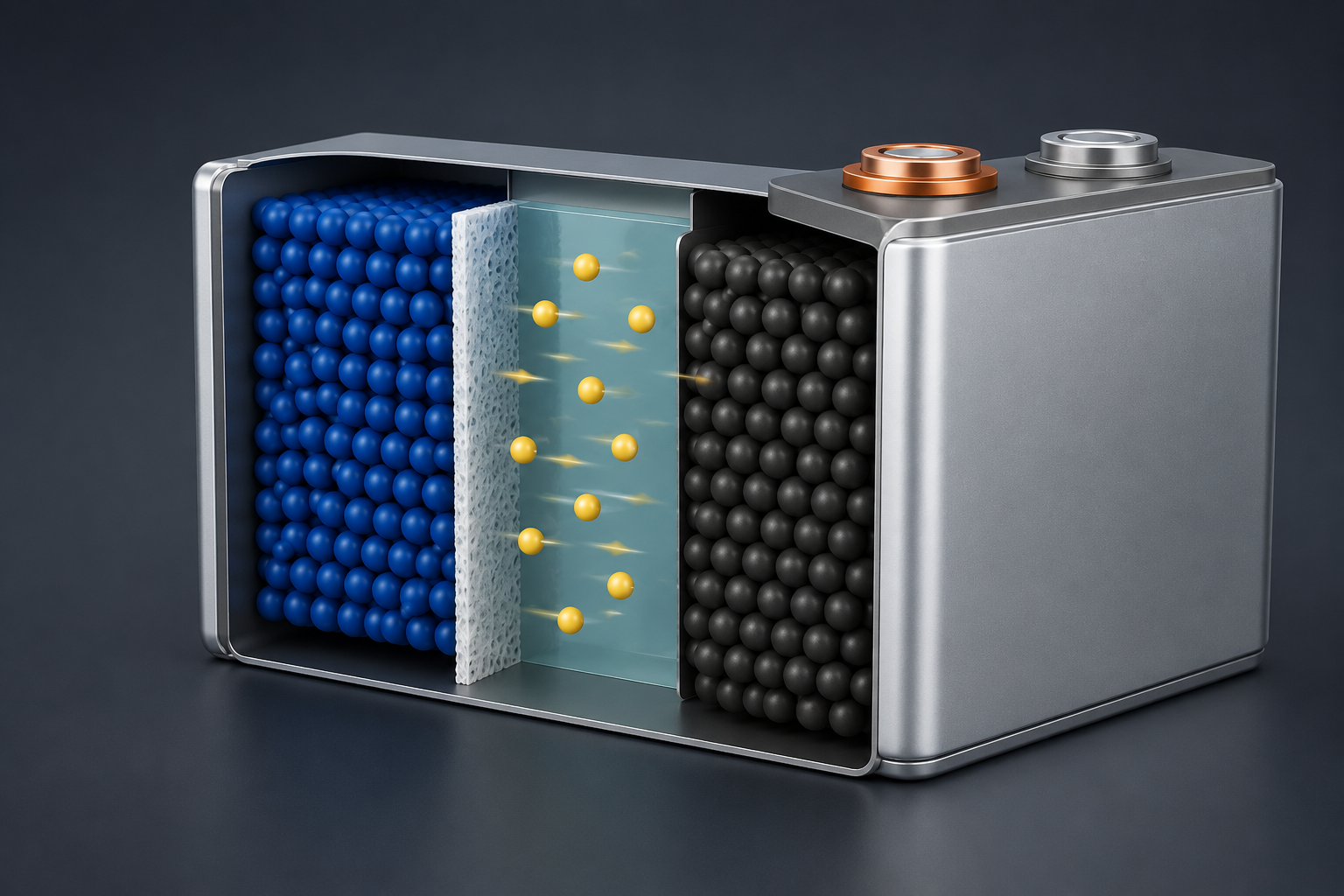
A sodium-ion battery is a rechargeable battery that stores and releases electrical energy by moving sodium ions between its positive and negative electrodes during charging and discharging.
The technology works very similarly to lithium-ion, but with one crucial difference: the battery uses sodium, not lithium, for power.
Inside every sodium-ion battery are four main components:
- A positive electrode (cathode)
- A negative electrode (anode)
- An electrolyte
- A separator
During charging, sodium ions move from the cathode to the anode through the electrolyte. When electricity is required, the process reverses, with the ions moving back to the cathode while electrons travel through the external circuit to power connected equipment.
This movement of ions is almost identical to the chemistry used inside lithium-ion batteries, meaning many of the manufacturing processes and battery management technologies are already well understood.
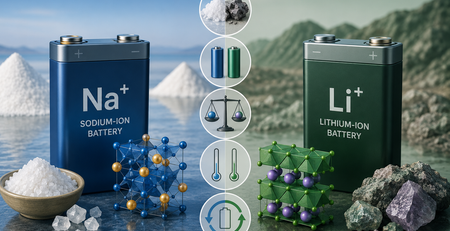
But, crucially, sodium is one of the most abundant elements on Earth. It is found in seawater and mineral deposits, and is much more available than lithium, which typically comes from underground brine reserves in salt flats and hard-rock minerals.
Sodium as an Alternative to Lithium: How Viable is it?
Research shows that sodium ions are about 1,000 times more abundant than lithium, one of the technology’s most significant advantages over its counterpart.
A BBC Futures piece recently highlighted the potential of sodium-ion batteries with an example from the Yarra Valley in Australia. Specifically, the technicians have found that sodium is:
- Cheaper to source
- Less water intensive to extract (it takes approximately 682 times more water to extract one tonne of lithium compared to sodium)
- Supports a lower cost of materials (copper foils can be replaced by aluminium foils)
- Safer to transport, due to lower flammability
Challenges in comparing the two highlight the need for significant research and development in sodium-ion technology.
Sodium ion’s lower energy density is the main problem (140-160 WH/kg compared to 140-220 Wh/kg). This makes sodium-ion, at least for now, a less obvious solution for EVs and a better option for other battery use cases.
Use Cases for Sodium-ion Battery Technology
Sodium-ion batteries can be used in a wide range of applications. While many think of sodium-ion as a replacement for lithium-ion, we see it as a viable alternative. Both have their place, and the introduction of sodium-ion batteries diversifies the market.
While there’s much development ahead, sodium-ion use cases are almost as broad as lithium-ion:
- Renewable energy projects: Store surplus renewable electricity for later use, smoothing intermittent generation and ensuring clean energy remains available when demand increases.
- Solar farms: Capture excess daytime solar generation and discharge stored energy after sunset, maximising renewable output and improving project profitability.
- Wind farms: Balance fluctuating wind generation by storing excess electricity during high winds and supplying power when wind speeds decrease.
- Commercial facilities: Reduce energy costs, manage peak electricity demand, improve energy resilience, and provide backup power during grid interruptions.
- Grid balancing services: Help electricity networks maintain stable frequency and voltage by rapidly absorbing or supplying power whenever grid conditions change.
- Microgrids: Enable independent energy systems to store locally generated electricity, improving reliability for communities, campuses, and remote industrial operations.
- Utility-scale battery energy storage: Support national electricity networks by storing large amounts of energy, integrating renewables, and enhancing long-term grid reliability.
- Backup power installations: Provide dependable emergency electricity during outages, ensuring essential services and critical equipment continue operating without interruption.
- Critical infrastructure: Protect hospitals, data centres, telecommunications, transport networks, and other essential facilities with reliable, resilient energy storage and backup power.
AceOn’s Sodium-ion Battery Energy Storage Solutions at a Glance

Below are the specifications of the sodium-ion battery energy storage systems that AceOn Group is currently developing:
2.5MWh Energy Storage System
The 2.5MWh system uses sodium-ion battery technology with a rated system voltage of DC1248V and a 1C charge/discharge rate.
Designed within a standard 20-foot outdoor container, it incorporates intelligent liquid cooling, operates over a temperature range of -30°C to +50°C, and supports a depth of discharge of up to 95% for efficient energy utilisation.
3.75MWh Energy Storage System
For larger projects, the 3.75MWh solution delivers increased storage capacity while maintaining the same compact 20-foot container footprint.
It also features intelligent liquid cooling, advanced battery management, IP54 environmental protection, corrosion resistance rated C4, and compatibility with major communication protocols, including CAN, MODBUS, IEC 61850, and EC104.
Both systems are engineered for reliable outdoor deployment and integrate advanced fire protection options, including perfluorohexanone or heptafluoropropane suppression, with optional water-based fire suppression for additional protection.
Case Study: AceOn and Sodium-ion Battery Technology in Africa
Thanks to our position as BESS innovators, we’re part of the StamiNa initiative, backed by the Faraday Institute.
AceOn is delighted to play a role in the expanded StamiNa programme, an innovative initiative funded through the Ayrton Challenge on Energy Storage that aims to accelerate the development and adoption of sodium-ion battery technology throughout Sub-Saharan Africa.
Working alongside a consortium of leading universities, research institutions and industry partners from both the UK and Africa, the project is focused on creating battery energy storage solutions that are cost-effective, scalable and designed to meet the unique needs of fast-growing markets across the region.
As part of the initiative, AceOn will strengthen its commitment to advancing local manufacturing capabilities, building technical expertise, preparing markets for deployment, and validating sodium-ion technology in real-world environments.
This work will help lay the foundations for a more resilient, sustainable and locally driven energy storage industry across the continent. Read more about the roll-out of sodium-ion technology in Africa here.
Want to Learn More About Sodium-ion Battery Technology?
Battery energy storage is evolving rapidly, and sodium-ion technology is among the most exciting developments in the sector. By offering a practical alternative to conventional lithium-ion systems, it opens new opportunities for cleaner, more resilient and more sustainable energy infrastructure.
AceOn is at the forefront of lithium-ion battery storage in the UK and in Africa. If you’d like more information about how sodium-ion could help your business, contact us today.